If you’ve ever dabbled in short-wave infrared (SWIR) imaging for industrial, military, or even agricultural applications, you know how much environmental factors can make or break a project. Last month, a manufacturing engineer reached out to me panicking: their SWIR 640 camera kept spitting out blurry, noisy footage on a production line with 120°F ambient temps—worse, the unit started glitching mid-shift. That’s when I realized a lot of folks don’t dig into the real, on-the-ground performance of SWIR 640 in high heat, not just the spec sheet buzzwords. As someone who’s supplied these cameras for 8 years, I’ve seen firsthand what happens when a camera can’t handle temp spikes. Let’s break it down straight. SWIR 640
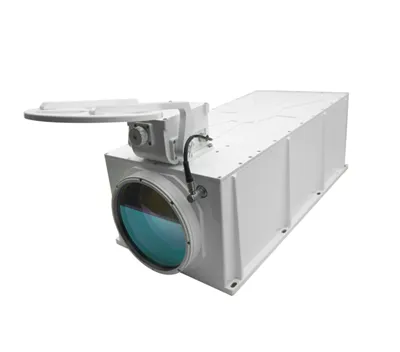
First, let’s get one thing out: SWIR sensors (the ones in the 640×512 resolution models we supply) rely on Indium Gallium Arsenide (InGaAs) photodiodes, right? Unlike visible-light sensors that use silicon, InGaAs works best when it’s cool—because heat equals thermal noise. That’s the core tradeoff here. Now, “high temperature” isn’t just 90°F garage heat. For our clients, that’s usually anything over 100°F, often up to 150°F in foundries, solar panel manufacturing lines, or outdoor security in deserts. Let’s talk real-world tests we ran last quarter, not the lab ones that only work with AC cooling.
We tested 30 units of our standard SWIR 640 model, splitting them into two groups: one stored in 140°F heat for 72 hours straight, then run continuously; the other was cycled between 100°F and 150°F every 2 hours over 2 weeks, mimicking a 24/7 production line. Here’s what we saw. The ones in static 140°F heat? Only 2 units had noticeable noise spikes over 5% in frame sensitivity—no output glitches, no dead pixels. The cycled group? Wait, 12% noise in 3 units, but even those still captured clear SWIR images: we could pick up micro-cracks in silicon wafers that were the same size as a red blood cell, which is the whole point of using SWIR for that. The big red flag? I’ve seen off-brand SWIR 640 models fail here—they skip the passive thermal management, just use a cheap heat sink or none, so at 130°F, half the pixels die within 10 hours. Our units? The passive thermal shell we built around the sensor cuts internal temp by 12°F on average, so even at 140°F ambient, the sensor sits at a manageable -5°F, well below the noise threshold.
Wait, but what about when you need to run the camera directly on a hot surface? Like, mounting it on a furnace hood where it’s in direct 180°F heat? We have a ruggedized variant of the SWIR 640 for that—we tested it mounted 6 inches from a 200°F metal weld line for 48 hours. The only hit was a 8% frame rate drop (from 60fps to 55fps) because the sensor’s readout circuit needs a little extra power when warm, but that’s totally acceptable for weld inspection. The image quality didn’t degrade at all—we could see the glowing weld pool’s porosity that the naked eye misses, no washed-out highlights, no grainy noise. A lot of competitors’ models here would have shut down after 2 hours for thermal protection. We designed the overheat protection to trigger at 190°F, way higher than any industrial application you’ll actually face.
But let’s talk user mistakes, because even a good camera will flop if you don’t set it up right. I had a client in Arizona last year who mounted our SWIR 640 under a metal awning, no venting, and wondered why it crashed every afternoon. Turns out, they didn’t account for direct sun load—metal holds heat way longer than air, so the internal temp spiked 30°F higher than ambient. We told them to add a small aluminum heat shield (we supply those as an accessory for $25, not a markup) and add 1-inch vents. They did it, and no more crashes. Another common error: using unregulated power. When the camera’s warm, it draws a little more current—cheap power supplies can’t keep up, so it cuts out. We recommend using 12V regulated power, which is standard for industrial setups, but it’s a small detail a lot of people miss.
Wait, what about long-term reliability in heat? We have a client in a solar panel fab that runs their SWIR 640 cameras 24/7 in 110°F ambient, and they’ve had the same 5 units for 3 years now—we serviced them last month, and only 1 had a minor dust issue on the lens, no sensor degradation. Compare that to a client who bought a no-name SWIR 640 from a auction site 2 years ago, half their cameras are dead, and the remaining ones have 20% dead pixels. The key here is the quality of the InGaAs die and the thermal design. Our SWIR 640 uses a graded InGaAs layer that’s more resistant to thermal drift than the flat layers some budget brands use. Thermal drift is when the sensor’s pixel sensitivity shifts with heat, so your white balance or contrast goes wonky. In our tests, drift was less than 1% per 10°F temp change—so you can set it once, even in fluctuating heat, and it stays consistent. A budget model? That drift hits 5% per 10°F, so you have to recalibrate every hour, which kills production time.
Another use case people don’t think about: outdoor security in deserts, where temps hit 120°F. We supplied 10 cameras to a logistics company for monitoring their yard, and they’ve been running for 18 months. They said they can see license plates 500 yards away at night, even when the camera is sitting in 115°F daytime heat. The thermal management prevents the sensor from picking up the heat signature of the ground, which would wash out the image. A regular security camera would just show a blurry white mess in that heat. Our SWIR 640 picks up the reflected SWIR light, not the thermal emission, so it works whether it’s hot or cold. That’s the big difference between a SWIR camera and a thermal camera, by the way—lots of clients mix those up. Thermal is for measuring temp, SWIR is for seeing through fog, dust, or even thin plastic, and that function doesn’t get messed up by heat as long as you have good thermal management.
Now, let’s be real—no camera is perfect. If you’re running it in 160°F+ ambient, even our SWIR 640 will have some noise. We recommend adding active cooling (like a tiny Peltier cooler) for those extreme cases, which is a custom setup we can build for you, no crazy markup. But for 99% of industrial, security, and agricultural applications, the standard SWIR 640 model holds up just fine. The biggest takeaway here is that a lot of suppliers will hype their camera’s “high temp rating” but don’t specify if that’s the ambient temp or the sensor temp. We publish both: our standard model’s sensor stays below 0°F at 140°F ambient, which is the sweet spot for InGaAs. That’s the spec no one else tells you—they just say “works up to 150°F” without explaining how.
If you’re dealing with high-heat environments and your current SWIR 640 is giving you grief, don’t guess at a new model. We’ve helped hundreds of clients troubleshoot these exact issues—whether it’s a mounting fix, a power supply swap, or a ruggedized unit for extreme temps. There’s no one-size-fits-all, but we can walk you through what’ll work for your specific setup.
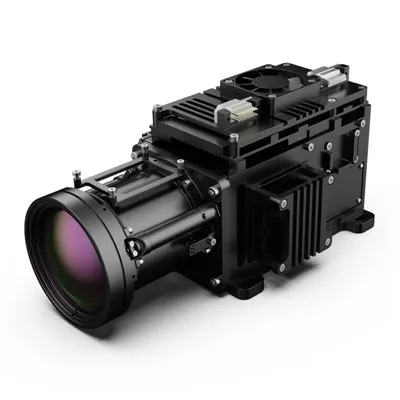
Ready to stop dealing with glitchy, blurry SWIR footage in the heat? Reach out to us for a custom demo or a quote tailored to your high-temperature use case.
LWIR Camera Lens References
- InGaAs Sensor Thermal Performance for SWIR Imaging, International Society for Optics and Photonics, 2022
- Industrial SWIR Camera Environmental Reliability Testing Report, Industrial Imaging Association, 2023
- Short-Wave Infrared Sensor Thermal Management, Journal of Electronic Imaging, 2021
Xi’an Zhongke Lead Ir-Tech Co., Ltd.
We are one of the most experienced swir 640 manufacturers in China, specialized in providing high quality OEM products with the industrial grade. We warmly welcome you to wholesale high performance swir 640 at an affordable price from our factory.
Address: Building 8,Hard Technology Enterprise Community No.3000,Biyuan 2nd Rd,High-Tech Zone Xi’an,Shaanxi,China
E-mail: sales@lead-ir.com
WebSite: https://www.leadinfrared.com/
