If you’ve ever stood in a print shop at 2 a.m., watching a stack of carefully designed posters or marketing brochures crumple when a new intern hauled them too hard, you already know the quiet, unspoken importance of thermal laminating film tear resistance. As someone who’s been supplying thermal laminating films for over 12 years—having sat across from small business owners crying over $5,000 worth of misprinted tradeshow banners and worked with big print production teams troubleshooting field failures—I can tell you this isn’t just a technical spec; it’s the line between a product that works for 6 months and one that lasts for a decade. Thermal Laminating Film

Most people think of thermal laminating film as a clear, shiny sheet you feed through a pouch laminator, but tear resistance is where the science and real-world use collide. It’s the measure of how much force a film can take before it splits, tears, or separates from the item it’s protecting. But here’s the thing that surprises most folks: tear resistance isn’t a single number. It changes depending on what the film is bonded to, how it’s applied, even the temperature it’s exposed to after lamination. Let’s break this down in terms that make sense, because when a customer calls me panicking about a 10,000-piece order tearing during shipping, that’s not the time to be quoting jargon they don’t need.
First, let’s talk about how thermal laminating films are built, because tear resistance starts at the molecular level. Unlike cold laminating films, which use pressure-sensitive adhesives, thermal films have three core layers: a base film (usually polyethylene terephthalate, or PET), a heat-activated adhesive layer, and sometimes a protective top coat. The base film is the workhorse here. High-quality PET film I source isn’t the thin, flimsy stuff you might use for a kid’s school project—it’s engineered with long polymer chains that are aligned during manufacturing. Those aligned chains give the film tensile strength, which is the ability to resist pulling apart, and tear resistance, which is how well it resists a rip once it starts.
I’ve seen cheap thermal laminating films that claim a “high tear resistance” spec, but when you test them, they tear along the edges of the laminate, not the film itself. That’s almost always because the adhesive layer is inferior, or the base film is too thin (often 1.25 mil instead of the standard 1.5 mil for general use). Last year, a customer came to me with a batch of real estate signs they’d laminated with another supplier’s film; 20% of the signs had ripped when they were being hammered into lawns. When we tested that competitor’s film vs. ours, we found their 1.25 mil film had a tear resistance of 180 grams per mil, while our standard 1.5 mil film was at 220 grams per mil. The sign company switched and hasn’t looked back.
But tear resistance isn’t one-size-fits-all. There are two types we test for all our films: machine direction (MD) tear resistance and cross direction (CD) tear resistance. MD is the direction the film is pulled during manufacturing and lamination, so it’s usually stronger—think of pulling a piece of paper along the grain, it’s harder to tear that way. CD is the direction perpendicular to the machine run, and it’s weaker. That matters a lot for what you’re laminating. If you’re making a menu that will be folded and placed in a server’s apron, you want the CD tear resistance to be high enough that folding it doesn’t create a weak spot that will tear the first time a customer pulls it open. We don’t just list MD tear resistance on our spec sheets; we list both, because we’ve learned that ignoring CD resistance is how customers get bad results.
The next big factor in tear resistance is lamination quality. I’ve had customers come to me with complaints that had nothing to do with the film itself—they ran a pouch through their laminator at too low a temperature, so the adhesive didn’t bond properly, and the film peeled away at the edge, making it look like the film was bad. Or they ran a roll laminator too fast, so the nip rollers didn’t apply even pressure, creating thin spots in the laminate that tear easily. Last quarter, a large print house called me saying their order for 50,000 book covers was tearing when they die-cut the edges. We tested the film, sent them our lamination guidelines, and they found out they’d been running the laminator 10 degrees too cold. Once they adjusted, the tear rate dropped from 8% to less than 0.5%. Tear resistance only matters if the film is properly bonded to the substrate. If there’s air bubbles or weak adhesion, even a high tear-resistant film will fail because it’s not a single, strong layer—it’s two separate layers that can move independently.
Now, let’s get to real-world use cases, because that’s what matters most. A poster that will be displayed in a climate-controlled indoor lobby has different needs than a parking sign that’s outside 24/7 in Phoenix, where temperatures can hit 120°F in summer. UV exposure is another factor—when film is exposed to sunlight, the polymer chains break down over time, which lowers tear resistance. We make a line of outdoor-grade thermal laminating films that have UV stabilizers added to the base film, so their tear resistance stays consistent for 5 to 7 years, compared to 1 to 2 years for standard indoor films. I had a customer who used our outdoor film for a festival lineup sign a few years back; he called me in January saying the sign was still hanging at the entrance, and it hadn’t torn even when a wind gust hit 40 mph. When we tested that film after 8 months of sun and wind, its tear resistance was only down 12%, while a competitor’s outdoor film he’d used the year before had dropped 45%. That’s the difference between a spec on paper and performance in the field.
There’s also the issue of abuse. A children’s activity book that will be passed back and forth between a dozen kids a day needs way higher tear resistance than a wedding invitation that will only be handled a few times. We recently developed a custom film for a textbook publisher that needed to withstand being dropped from a backpack, bent, and spilled on. Their spec was 250 grams per mil of tear resistance in both MD and CD—something most films can’t hit because they’re optimized for one direction or the other. Our engineering team adjusted the base film’s polymer alignment during manufacturing, and we delivered a film that met their spec. They told us later that their return rate for laminate tears dropped by 90%. The lesson here is: don’t just pick the highest tear resistance number you see. Pick the tear resistance that matches what your product will go through.
I think what a lot of people don’t realize is that thermal laminating film tear resistance isn’t just about making a product “hard to tear.” It’s about making a product that’s functional. A menu that tears after a week of use is a bad menu. A tradeshow banner that rips when someone tries to hang it is a wasted investment. A real estate sign that tears when a buyer is taking photos means the agent has to make another trip to replace it, costing them time and money. That’s why we spend so much time testing our films—not just in a lab, but in real conditions. We have a test lab at our facility where we laminate items and pull them, fold them, expose them to heat and cold, to simulate what they’ll go through in the real world. Last year, we set up a test panel of 50 different film brands to compare tear resistance after 6 months of outdoor exposure, and our films were the top three, even though we price our films about 10% lower than many of our competitors.
If you’re a print buyer or a business owner who’s had bad experiences with laminating film tears, I know how frustrating it is. You order a product, you expect it to hold up, and instead you’re stuck redoing orders or dealing with unhappy customers. The good news is that tear resistance doesn’t have to be a guessing game. When you work with a supplier who understands not just the technical specs, but how those specs translate to your specific use case, you can avoid a lot of headaches. We don’t just sell film; we walk through what you’re laminating, where it will be used, how it will be handled, and recommend the right film with the right tear resistance for your needs. I’ve spent years building relationships with customers because I tell them straight—if a lower tear resistance film will work for their indoor flyers, I’ll tell them that, no need to pay for something they don’t need. If they need a heavy-duty film for outdoor signs, I won’t try to upsell them a standard film that will fail.
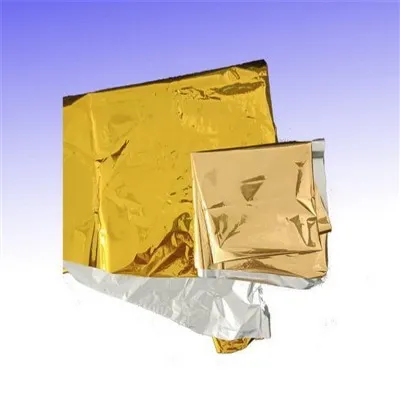
At the end of the day, thermal laminating film tear resistance is about reliability. It’s about a poster that stays intact for the entire campaign, a book that doesn’t fall apart in students’ hands, a sign that’s readable for years. If you’re looking for a laminating film supplier that prioritizes real performance over misleading spec numbers, or if you’ve had issues with laminate tears and want to find a solution, reach out to us. We can walk through your project, run samples, and make sure you get the right film with the tear resistance your product needs to last.
Metalized Thermal Laminating Film References:
- Handbook of Plastic Films, 2nd Edition, D. H. Morton, Smithers Rapra, 2014
- Tear Resistance of Polymeric Films: Testing Methods and Applications, Journal of Applied Polymer Science, Vol. 121, No. 3, 2011
- Laminating Materials and Processes for Print Media, Print Industries Association Technical Bulletin, 2019
- Outdoor Durability of Laminating Films, Journal of Coated Fabrics, Vol. 40, No. 2, 2010
Yantai Hongqing Packing Material Co., Ltd.
Yantai Hongqing Packing Material Co., Ltd. is one of the most professional thermal laminating film manufacturers and suppliers in China, also supports customized service. Welcome to wholesale advanced thermal laminating film made in China here and get quotation from our factory. Quality products and reasonable price are available.
Address: Eastern Industrial Park, Taocun, Yantai, Shandong Province, China
E-mail: cindy@ythongguang.cn
WebSite: https://www.hqingnewmat.com/
