If you’ve ever walked through a machine shop, a aerospace component facility, or even a structural steel fabrication yard, you’ve likely seen 4130 alloy steel bars tucked away in storage racks. As someone who’s supplied alloy steel bars for over a decade, I can’t tell you how many times I’ve gotten the same question from fabricators, engineers, and even hobbyists: “What’s the actual tensile strength of 4130? And why does it matter that much?” It’s not a trivial question, either—tensile strength is the make-or-break metric for parts that hold up under pressure, from aircraft landing gear to off-road vehicle roll cages to industrial tooling. Too low, and a part snaps under load; too high, and you’re wasting budget on overengineered material that doesn’t need to be that strong. Alloy Steel Bar
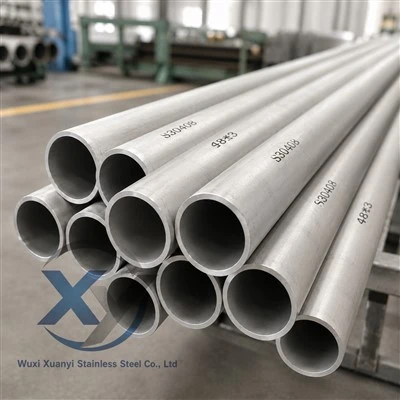
First, let’s break down what 4130 alloy steel is, because its composition directly ties to its tensile strength. Unlike plain carbon steels, 4130 is a chromium-molybdenum alloy, with roughly 0.30% carbon, 1.00% chromium, and 0.20% molybdenum. Those elements aren’t just there for show: chromium adds hardness and corrosion resistance, while molybdenum boosts toughness and prevents brittleness at high temperatures. Most importantly, 4130 is a heat-treatable steel, which means you can adjust its tensile strength drastically by controlling how you quench and temper it—something that’s unique to many other alloy steels in its price range. That flexibility is why it’s such a workhorse for so many industries.
Now, the number everyone cares about: tensile strength. At its most basic, tensile strength is the maximum amount of pull a material can handle before breaking. For 4130, this isn’t a single number—it depends entirely on its condition. Let’s start with the most common states you’ll find a 4130 alloy steel bar in: as-rolled, normalized and tempered, and heat-treated (often called “quenched and tempered” or Q&T).
As-rolled 4130, which is the mill finish straight from the rolling process, typically has a tensile strength of 95,000 to 110,000 psi. This is the softest state, perfect for parts that won’t see heavy loads but need to be easy to machine—like brackets or simple structural supports. But if you’re building a roll cage for a race car, that’s not going to cut it. You need normalized and tempered 4130, which is heated to around 1,550°F, held for several hours, then quenched and tempered again at a lower temperature. That brings tensile strength up to 110,000 to 130,000 psi, with a yield strength (the point where a part permanently deforms) of around 85,000 to 100,000 psi. But wait, if you really need maximum strength—say, for aircraft landing gear or high-stress fasteners—you can go with full heat-treated 4130. Quench it in oil or water after heating to 1,650°F, then temper at a temperature between 1,100°F and 1,200°F, and you’re looking at tensile strength of 180,000 to 200,000 psi. That’s three times stronger than as-rolled, and it’s why 4130 is so versatile.
I’ve seen too many people mix up tensile strength with yield strength, and that’s a costly mistake. Yield strength is the point where a part won’t go back to its original shape once load is removed; tensile strength is when it breaks. For most industrial applications, you care about both—you don’t want a part bending under load, and you definitely don’t want it snapping. For example, a roll cage needs a yield strength high enough to prevent deformation during a crash, but a tensile strength high enough to avoid rupturing on impact. That’s why 4130’s balance of strength and toughness is such a big deal: unlike higher-strength steels like 4140, which can be more brittle, 4130 retains good impact resistance even when heat-treated to high tensile strengths. I’ve had a customer who was building off-road racing components tell me he switched from 4140 to 4130 because his parts were cracking in rough terrain—turns out, 4130’s lower carbon content gives it better toughness, even at the same tensile strength.
Now, let’s talk about factors that can throw those tensile strength numbers off. First, bar size: smaller diameter 4130 bars quench faster and more evenly, so their tensile strength is more consistent. Larger bars, like 4-inch or 6-inch diameter, might have a “core” that doesn’t heat-treat as well, so their tensile strength can be 10-15% lower than smaller bars. That’s why when I supply 4130 alloy steel bars, I always ask customers what size and application they’re using them for—so I can point them to the right heat-treated condition, not just a one-size-fits-all number.
Another factor is machining and welding. If you machine a 4130 bar after heat-treating, you’ll introduce stress concentrations, which can lower effective tensile strength in that area. And welding 4130? You can’t just weld it like mild steel—you have to preheat it to 300-400°F to prevent cracking, and post-weld heat treat it to restore tensile strength in the heat-affected zone. I’ve had customers come to me with welded parts that broke early, and 9 times out of 10, they skipped the preheating or post-weld treat. It’s a small step that makes a huge difference in tensile strength and part longevity.
You might be wondering why 4130 is preferred over other steels, like AISI 1018 or stainless steel, for high-strength parts. Let’s do a quick comparison. AISI 1018 is a mild carbon steel, tensile strength around 60,000 psi—way too low for anything heavy-duty. Stainless steel 304 has a tensile strength of around 75,000 psi, and even 316 only gets up to 80,000 psi when annealed. Heat-treated 4130, on the other hand, hits 180,000 psi, which is more than double. And unlike many stainless steels, 4130 is cost-effective. As a supplier, I can tell you that 4130 is priced competitively with other alloy steels, but its strength-to-weight ratio is unbeatable. That’s why it’s the go-to for aerospace, automotive, and industrial applications where every pound matters—stronger parts without extra weight.
Let’s get into real-world examples, because numbers don’t mean much without context. Last year, I supplied 4130 alloy steel bars to a local aerospace shop building a custom drone landing gear. They needed a part that could handle repeated impacts, had a tensile strength over 170,000 psi, and was lightweight. We sent them normalized and tempered 4130 bars, heat-treated to 185,000 psi tensile strength, and they told me later that the landing gear withstood 10 times the required impact load without bending or breaking. Another customer is a custom car builder who uses 4130 for roll cages—they told me that switching from mild steel to our heat-treated 4130 bars cut the weight of their cages in half, while passing all safety crash tests. Those are the kind of results that make 4130’s tensile strength matter.
I also get questions about testing: how do you actually measure a 4130 bar’s tensile strength? The standard test is a tension test, where a machined sample is pulled until it breaks, and load is recorded at failure. For alloy steel bars, mills usually provide a material test report (MTR) that lists the exact tensile strength, yield strength, and elongation (how much the sample stretches before breaking) for each batch. When I sell 4130 bars, every order comes with an MTR, so customers can verify that the material meets their specifications. That transparency is important—no guesswork, no vague numbers, just hard data.
Now, let’s address a common misconception: some people think higher tensile strength is always better, but that’s not true. If you’re making a simple farm tool, like a shovel blade, you don’t need 180,000 psi tensile strength—110,000 psi is more than enough, and it’s easier to machine and less expensive. If you overspec, you’re wasting money on material you don’t need. That’s why my team always works with customers to match the 4130 bar’s tensile strength to their specific application, instead of pushing the strongest option every time. It’s not about selling the biggest, strongest bar—it’s about selling the right bar for the job.

If you’re in the market for 4130 alloy steel bars, whether you’re building a race car, a drone, industrial machinery, or any other part that depends on reliable tensile strength, you need a supplier who understands the material’s nuances. Tensile strength isn’t just a number—it’s the difference between a part that lasts and a part that fails. Our team has been working with 4130 for years, and we can help you select the right condition, size, and heat treatment to meet your exact needs. To discuss your project, ask specific questions about 4130 tensile strength, or to get a quote, reach out to our team to connect for a procurement consultation.
Stainless Steel Welded Pipes and Tubes References:
- ASTM A29/A29M-22, Standard Specification for Steel Bars, Carbon and Alloy, Hot-Wrought and Cold-Finished, General Requirements for.
- ASM International. (2019). Alloy Steel Selection: 4130 Chromium-Molybdenum Steel.
- NASA Materials and Processes Technical Information System (MAPTIS). (2021). Material Property Data for AISI 4130 Steel.
- Machining Design Guide. (2022). Tensile Strength Properties of Common Alloy Steels.
Wuxi Xuanyi Stainless Steel Co., Ltd.
Wuxi Xuanyi Stainless Steel Co., Ltd. is one of the most professional alloy steel bar manufacturers and suppliers in China. With abundant experience, we warmly welcome you to wholesale bulk durable alloy steel bar made in China here from our factory. If you have any enquiry about cooperation, please feel free to email us.
Address: Room 1207, Building 11, Shengang Metropolis Plaza, No. 299 Fangcheng Avenue, Xinwu District, Wuxi City,China.
E-mail: jscherryxy@163.com
WebSite: https://www.xuanyisteel.com/
