Hey there! I’m a supplier of stainless flanges, and I’ve been in this business for quite some time. One of the most common questions I get from customers is, "How do I choose the right flange rating for my specific application?" Well, you’re in the right place because I’m gonna break it down for you. Stainless Flanges

First off, let’s talk about what flange rating actually means. A flange rating is like a safety certificate for your flange. It tells you how much pressure and temperature the flange can handle without failing. Think of it as the strength of a wrestler. You wouldn’t want a weak wrestler in a heavy – duty match, right? Similarly, you need the right – rated flange for your specific application.
Understanding the Basics of Flange Ratings
There are different standards used to define flange ratings, like ASME (American Society of Mechanical Engineers) in the US and DIN (Deutsches Institut für Normung) in Europe. The ASME standards are pretty common in North America, and they use numbers like 150, 300, 600, 900, 1500, and 2500 to represent different pressure classes.
The lower the number, the lower the pressure and temperature the flange can handle. For example, a 150 – rated flange is good for light – duty applications with relatively low pressure and temperature, while a 2500 – rated flange is built for heavy – duty, high – pressure and high – temperature jobs.
Pressure Considerations
When choosing a flange rating, the first thing you gotta look at is the pressure in your system. This is the force that the fluid or gas in your pipeline exerts on the flange. You need to know the maximum operating pressure of your system. This might seem tough, but it’s usually specified in your project’s engineering documents.
If you make a mistake here and choose a flange with a lower rating than your system’s pressure, it can lead to leaks, and in the worst – case scenario, a catastrophic failure. For example, in a water supply system for a small building, you might be able to get away with a 150 – rated flange because the water pressure is relatively low. But in an oil refinery, where the pressure can be extremely high, you’ll need a much higher – rated flange, like a 600 or 900.
Temperature Factors
Temperature is another crucial factor. High temperatures can weaken the material of the flange over time. Stainless steel is a popular choice for flanges because it has good heat resistance, but different grades of stainless steel have different temperature limits.
You need to know the maximum and minimum temperatures that your flange will be exposed to. If the temperature fluctuates a lot, you also need to consider the effect of thermal expansion and contraction. For instance, in a steam pipeline, the temperature can be quite high, so you need a flange that can handle the heat. A 300 – rated flange might be suitable for moderately high – temperature steam applications, but for super – heated steam, you’ll likely need a 600 – rated or higher flange.
Fluid or Gas Type
The type of fluid or gas flowing through your system also matters. Some fluids are corrosive, like acids or seawater. If you’re dealing with a corrosive fluid, you need a flange made of a material that can resist corrosion. Stainless steel is a great option in these cases because it has a natural oxide layer that protects it from rust and corrosion.
But even with stainless steel, different grades offer different levels of corrosion resistance. For example, if you’re using seawater in a desalination plant, you might want a flange made of a higher – grade stainless steel, like 316L, which contains more molybdenum and offers better corrosion resistance than standard 304 stainless steel.
Installation and System Compatibility
It’s not just about the pressure, temperature, and fluid type. You also need to make sure that the flange is compatible with the rest of your system. This includes the pipe size, the connection type (welded, threaded, or slip – on), and the gaskets and bolts you’ll use.
The pipe size is important because the flange needs to fit properly on the pipe. Using the wrong – sized flange can lead to leaks. The connection type depends on the ease of installation and maintenance, as well as the pressure and temperature requirements of your system. For high – pressure applications, welded flanges are often the best choice because they provide a strong, leak – proof connection.
Cost – Benefit Analysis
Let’s be real, cost is always a factor. Higher – rated flanges are usually more expensive because they’re made with better materials and more precise manufacturing processes. But you can’t just go for the cheapest option. You need to do a cost – benefit analysis.
If you choose a lower – rated flange to save money, but it fails and causes a shutdown of your system, the cost of repairs, lost production, and potential safety hazards can far outweigh the initial savings. On the other hand, if you over – specify the flange rating, you’re spending more money than you need to.
So, you need to find that sweet spot where the flange meets your application requirements without breaking the bank.
Real – World Examples
Let me give you some real – world examples to drive the point home.
Example 1: Chemical Processing Plant
In a chemical processing plant, they’re dealing with all sorts of corrosive chemicals at high pressures and temperatures. They might use a 600 – rated flange made of 316L stainless steel for pipelines carrying concentrated acids. The high – rated flange can handle the pressure, and the 316L stainless steel resists corrosion from the acids.
Example 2: HVAC System
In a heating, ventilation, and air – conditioning (HVAC) system in an office building, the pressure and temperature are relatively low. A 150 – rated flange made of standard 304 stainless steel might be sufficient. It’s cost – effective and can handle the normal operating conditions of the HVAC system.
Where We Come In
As a stainless flange supplier, I’ve got a wide range of flanges with different ratings and materials to suit your needs. Whether you’re working on a small DIY project or a large industrial installation, we’ve got you covered.
If you’re still not sure which flange rating is right for your specific application, don’t worry. Our team of experts is here to help. We can look at your project details, understand your requirements, and recommend the best flange for you.
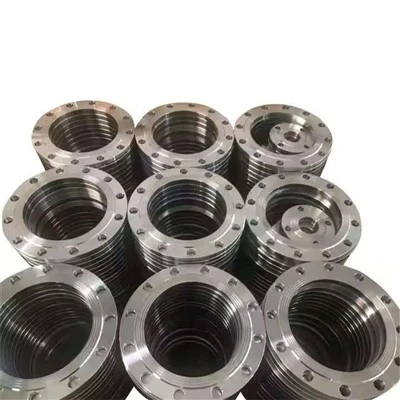
We pride ourselves on providing high – quality stainless flanges at competitive prices. Our flanges are made with strict quality control measures to ensure they meet or exceed industry standards.
Stainless Flanges So, if you’re in the market for stainless flanges, reach out to us. We’re ready to have a chat about your project and help you make the right choice. Don’t hesitate to start a conversation with us about your flange needs. Let’s work together to get the perfect flanges for your application.
References
- ASME B16.5 – Pipe Flanges and Flanged Fittings
- DIN Standards for Flanges
- Stainless Steel Handbook for Engineers
Liaocheng Shengkjia Machinery Accessories Co., Ltd.
As one of the most professional stainless flanges manufacturers and suppliers in China, we offer a wide range of products with superior quality. With abundant experience, we warmly welcome you to buy advanced stainless flanges at low price from our factory. For more cheap products, contact us now.
Address: No 8 Liaohe Road, Liaocheng City, Shandong Province, China
E-mail: Lcshshenghuaiwei@aliyun.com
WebSite: https://www.shengjia-steel.com/
