If you’ve ever stood in front of a domed mosque, a courtyard madrasa, or even a centuries-old mausoleum, you might have noticed how the lines of its structure, the rhythm of its arches, and the way light moves through its windows all feel deliberate. For a long time, I thought that design was just about beauty—until my team and I started our work as a hijab supplier, and we began noticing surprising parallels between the fabric we send to customers and the hidden structural choices that define Islamic architecture. At first, connecting a piece of cloth worn by millions of Muslim women to stone, tile, and wood felt like a stretch, but the more we talked to architects, historians, and even the Muslim communities that built those ancient spaces, the clearer it became: the hijab and Islamic architecture share a core purpose—guiding intention, honoring modesty, and creating spaces that feel both personal and communal. Hijab
Let’s start with the basics, because too often people reduce both the hijab and Islamic architecture to simple rules of “covering” without digging into the meaning behind those choices. Modesty, for Muslim communities, isn’t about hiding parts of the world—it’s about prioritizing what matters most: connection, respect, and focus. A hijab isn’t just fabric on a head; it’s a quiet declaration that you’re here to engage with the people around you and with something larger than yourself, not to perform for an audience. Islamic architecture works the exact same way. It’s not about building walls to exclude, but about creating boundaries that frame moments of meaning, that shift how you move through a space, and that invite reflection.
Take the concept of “satr” (the Arabic word for modesty, often translated as both personal modesty and the kind of privacy that honors others) as a starting point. For many Muslim women who wear a hijab, satr means covering parts of their body that are meant for intimate or private spaces, so they can move freely in public without being objectified. In Islamic architecture, satr takes the form of things like courtyard walls, screens, or half-walls that separate public spaces from private family areas, or that guide people through a space without overwhelming them. The Great Mosque of Cordoba, for example, has rows of repeating arches called “arcades” that stretch for hundreds of meters. Those arches aren’t just decorative—they create a rhythm that calms the eye, that breaks up the vastness of the space, and that invites worshippers to focus on their prayers rather than getting distracted by the people next to them or the details of the building itself. That’s the same quiet focus a hijab gives someone: it removes one external distraction, so they can connect with their own intention.
I remember a conversation I had with a senior architect in Cairo a few years ago, when we were delivering a bulk order of modest, breathable hijabs for a community event at a historic mosque. He told me that when he works on new Islamic-style buildings, he doesn’t just copy arches or domes—he thinks about how the space will make people feel, just like a hijab isn’t just fabric, it’s how a person carries themselves in a space. He mentioned the madrasa of Sultan Hasan, a 14th-century school in Cairo, which has a massive central courtyard surrounded by four iwans (vaulted halls). The iwans face each other, so when you stand in the courtyard, you’re not just looking at a wall—you’re framed by the building to face the qibla (the direction of Mecca) when you pray. That framing is exactly what a hijab does for a woman: it frames her identity as someone who is here for a purpose, not just a presence in a room.
Another parallel is the way both the hijab and Islamic architecture balance individual and communal needs. A hijab is a personal choice—some women wear it every day, some only for prayers, some choose different styles to match their mood or needs—but it’s also a shared sign of respect for the people around you. If you’re sitting in a mosque, wearing a hijab is a way to show that you’re there to pray, not to draw attention to your appearance. That balance is baked into Islamic architecture too. The Dome of the Rock in Jerusalem, for example, is a public landmark that draws millions of visitors a year, but it’s also a sacred space where worshippers come alone to pray. Its octagonal shape is intentional: eight sides mean it connects to all directions, so no matter where you stand, you feel part of the communal purpose of the building, while the inner domed chamber gives you a small, private space to reflect. For our team, that’s exactly the energy we aim for with the hijabs we supply: a piece that feels personal enough to make you comfortable, but respectful enough to honor the spaces and communities you’re in.
Let’s talk about practicality too, because neither the hijab nor Islamic architecture is just symbolic—they’re built to work with the world around them, especially for communities in warm, arid climates. I’ve spent years testing different fabrics for our hijabs, making sure they’re breathable, lightweight, and don’t trap heat in places where the sun is strong. That’s exactly the same principle that shaped Islamic architecture in places like Iran, Morocco, and Spain. The courtyard houses (called “riads” in Morocco) you’ll find in medinas there are built with high walls that block direct sun, and central fountains that cool the air as water evaporates. The windows are small, placed high on walls, so they let in soft, indirect light instead of harsh midday sun. A good hijab does the same for a woman’s head: it blocks harsh sun, keeps her cool, and allows air to circulate so she can move comfortably outside in hot weather. We once worked with a group of Muslim students in Dubai who told us they’d been buying cheap, thick hijabs that made them overheated at school, and they were thrilled when we found a lightweight, breathable cotton blend that works even in 110-degree heat. That practical, community-focused design is at the heart of both our work and the architecture I’m talking about.
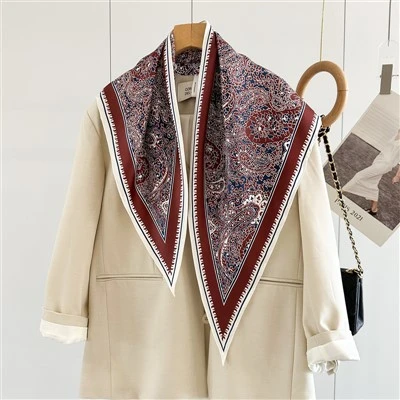
What’s most surprising to many people outside the community is that neither the hijab nor Islamic architecture is rigid or one-size-fits-all. For centuries, Islamic architecture has adapted to different cultures and spaces: the soft, curved domes of Ottoman mosques in Turkey look different from the geometric tile work of Mughal mosques in India, which look different from the mud-brick mosques of West Africa. Hijabs are the same: there are silk hijabs for formal events, cotton for everyday wear, chiffon for summer, linen for cooler weather, and styles from different regions that reflect the cultures of the people who wear them. A 16th-century Mughal emperor would never have used a geometric tile pattern meant for a mosque wall on a textile, but today, many hijabs are made with those exact same patterns, so a woman can carry a piece of that history with her wherever she goes. That adaptability is part of what makes both the hijab and Islamic architecture living, evolving traditions, not just relics of the past.
I’ve thought a lot about why this parallel between hijab and architecture matters, especially now. There’s so much misinformation about both: people either see the hijab as a symbol of oppression or a simple fashion choice, and Islamic architecture as a set of generic old buildings with domes and arches. But when you talk to the people who use these spaces and wear these fabrics, you realize they’re both rooted in the same idea: that spaces, and clothing, should support the things that make life meaningful—connection, respect, focus, and comfort.
For our team, that’s why we don’t just supply hijabs. We work with different Muslim communities to create fabrics and styles that fit their needs, whether that’s modest hijabs for prayer, durable ones for work or school, or special occasion pieces that honor cultural traditions. Just like architects design spaces that work for the people who use them, we design hijabs that work for the women who wear them. And that’s why when I look at a mosque, I don’t just see stone and tile—I see the same intention that goes into each hijab we pack and ship every day.

If you’re part of a mosque, a community organization, a fashion brand, or a business looking for high-quality, modest hijabs made with respect for Islamic traditions, we’d love to chat. We work with groups of all sizes, from small local organizations to large national institutions, and we can customize styles, fabrics, and quantities to fit your needs.
Heavyweight Shawl References:
- Petersen, A. (1996). Dictionary of Islamic Architecture. Routledge.
- Esposito, J. L. (2002). The Oxford History of Islam. Oxford University Press.
- Sadek, G. (1997). The Arab House: Architectural History, Social Structure and Domestic Space in the Arab World. I.B. Tauris.
- Al-Hibri, M. (2004). Modesty in Muslim Societies: Gender, Vision, and Practice. University of Texas Press.
- Blair, S. S., & Bloom, J. M. (1994). The Art and Architecture of Islam, 1250–1800. Yale University Press.
Deqing Boliya Silk Co., Ltd.
Deqing Boliya Silk Co., Ltd. is one of the most professional hijab manufacturers and suppliers in China, featured by quality products and good service. Please rest assured to wholesale the newest hijab in stock here and get quotation from our factory. We also accept customized orders.
Address: Baibiao Industrial Zone, Xinshi Town, Deqing County, Zhejiang Province, China
E-mail: boliya@boliyasilk.com
WebSite: https://www.boliyasilk.com/
