If you’ve ever driven past a packaged sewage treatment plant on a quiet industrial or residential edge, you might’ve caught a faint, earthy whiff—nothing overwhelming, but enough to make you wonder: how do these compact, self-contained systems keep odors from becoming a nuisance? As someone who’s spent the last 12 years designing and supplying packaged sewage treatment plants for small towns, commercial developments, and even remote resorts, I get it. Odor control isn’t just a nicety; it’s the difference between a plant that blends into its surroundings and one that becomes a neighborhood talking point (and not the good kind). The truth is, effective odor management for these systems isn’t a one-size-fits-all fix—it’s a layered approach, tailored to the plant’s size, location, and the wastewater it’s treating. Over the years, I’ve worked with clients who thought a simple filter would do the trick, only to deal with complaints within six months, and others who invested in a balanced system that’s run odor-free for nearly a decade. Today, I’m breaking down the methods we rely on most, straight from the field, no fancy jargon (though some science is unavoidable, I’ll keep it grounded in what actually works day-to-day). Packaged Sewage Treatment Plant

First, let’s start with the source—because the best odor control is stopping it before it starts, not scrubbing it after it escapes. Packaged sewage treatment plants process three main types of wastewater, and each has different odor-causing compounds: residential wastewater has hydrogen sulfide (that rotten egg smell) from organic decomposition, food processing plants have volatile fatty acids (sour, sharp odors), and even some light industrial wastewater has ammonia (pungent, sharp) from cleaning agents. The key here is intercepting these compounds right where they form, usually in the primary treatment stage where solids settle and begin breaking down. One of the most basic but underrated source controls we use is ensuring the plant has positive sealing on all primary treatment tanks, collection lines, and wet wells. I’ve seen too many cheaply built plants with loose hatches or cracked pipe joints that let sewage gases seep out before they can be contained. For example, last year we installed a new plant for a small coastal town that had been using a second-hand unit with a leaky primary tank; within weeks, nearby residents were complaining about the smell. We re-sealed all tank connections and replaced the old hatch gaskets with EPDM rubber, which resists the corrosive effects of sewage gases, and the issue was gone. Another source control method we prioritize is maintaining consistent flow rates and aeration levels. When wastewater sits stagnant, it produces more hydrogen sulfide than when it’s moving and aerated—this is why many packaged plants have built-in flow meters and aeration controls that automatically adjust based on incoming load. I’ve found that clients who skip regular aeration checks (like forgetting to clean the diffusers that pump air into the tanks) end up with more odor issues than those who do. A quick monthly check to clear clogged diffusers can save a lot of headaches later.
Once we’ve contained the gases and reduced their formation at the source, the next step is capturing the remaining gases before they’re released into the atmosphere. For most packaged plants, this means using a dedicated collection system that pulls air from the sealed tanks and pipes into a treatment unit. The type of capture system depends on the plant’s size: small plants (serving less than 5,000 people) might use passive ventilation with gentle fans that draw gases out without creating negative pressure that could suck in outside air and disrupt treatment processes. Larger plants, or those in more sensitive locations (like near a housing development), use active capture systems with variable-speed blowers that adjust airflow based on gas concentration. A big mistake we see clients make here is using a blower that’s too powerful. If you pull air too fast, you can suck untreated wastewater into the gas lines, which clogs filters and creates more odors when it’s processed. We always size blowers to move just enough air to keep gases contained, not more. Last year, we supplied a plant for a rural resort that had a temporary capture system with an oversized blower; the line would get flooded with wastewater whenever the rain hit, causing sulfur odors that drifted across the pool area. We swapped the blower for a smaller, variable-speed model, and now it runs quietly, no more flooding, and no odors at the pool.
Now, the actual treatment of captured gases—this is where the methods vary most, and where most of our clients ask for guidance. Let’s start with the most common method for smaller plants: activated carbon filtration. Activated carbon works by adsorbing odor molecules onto its porous surface, trapping them before they’re released. It’s affordable, easy to install, and requires minimal maintenance—you just swap out the carbon every 6 to 12 months, depending on gas load. But it’s not perfect. Activated carbon works best for low concentrations of hydrogen sulfide and ammonia; if your plant treats food or agricultural wastewater with higher levels of volatile fatty acids, carbon can get saturated quickly, sometimes in as little as 3 months. I once had a restaurant client who had a packaged plant with only a carbon filter, and after a busy summer with a festival that drew extra crowds, the carbon was saturated in 2 months, and the smell was unbearable. We added a pre-treatment step to the system, and now the carbon lasts the full year. For clients with higher gas loads, or for plants near residential areas where even faint odors can be a problem, we turn to biofiltration. Biofilters use natural microorganisms that feed on odor compounds, breaking them down into harmless byproducts like carbon dioxide and water. A typical biofilter for a packaged plant is a small tank filled with a porous medium like peat, wood chips, or compost, where the microorganisms live. The captured gas is blown through the medium, and as the gas passes, the microbes eat the odors. Biofiltration is more effective than carbon for most complex odors, requires less frequent media replacement (usually every 2 to 5 years), and is more eco-friendly. The downside is that biofilters need consistent moisture—if the medium dries out, the microbes die, and the filter stops working. We always include a small misting system with our biofilter units, so it automatically sprays water to keep the medium damp, even in dry climates. Last month, we installed a biofilter system for a plant in Arizona, where summer temperatures hit 110°F; the misting system runs on a timer, and we haven’t had a single odor complaint in the 8 months since installation. For the most sensitive locations, like a plant adjacent to a school or a luxury housing development, we combine both biofiltration and a secondary chemical scrubber. Chemical scrubbers use a mild solution (usually sodium hydroxide or hydrogen peroxide) to neutralize odor compounds. They’re highly effective, even for high concentrations, but they require more maintenance—you have to check and replenish the chemical solution regularly. We only recommend this for clients who need absolute odor control, like when a plant is within 50 feet of a residential neighborhood where even a faint whiff is a dealbreaker. I worked on a project a few years ago for a new housing development that was being built next to a small town’s existing packaged plant. The town was worried about complaints, so we added a chemical scrubber to the existing gas treatment system. It’s been 5 years, and there haven’t been any odor complaints from the new homeowners.
Beyond these core methods, there are a few extra steps we take to make odor control more reliable and low-maintenance for our clients. One is adding odor sensors to the system. These small devices measure gas concentration in the treatment tanks and in the exhaust air, and they alert us (and the client) if levels get too high. Last year, we had a client whose sensor detected a spike in hydrogen sulfide levels, which turned out to be a clogged aeration line that was causing the wastewater to go stagnant. The sensor alerted us before the smell became noticeable, and we fixed the line in a day, avoiding complaints. Sensors are a small investment, but they give both us and our clients peace of mind. Another step is regular maintenance, and I can’t stress this enough. No matter how good your odor control system is, it won’t work if you don’t maintain it. That means checking the seal on tanks and pipes, cleaning aeration diffusers, replacing carbon or biofilter media on schedule, and testing chemical solutions in scrubbers. We offer annual maintenance contracts for all the packaged plants we supply, because I know most clients don’t have the expertise to do this themselves. A lot of people think packaged plants are “set it and forget it,” but that’s not true—regular maintenance is the key to keeping odors under control.
I also want to address a common myth I hear all the time: that packaged sewage treatment plants are inherently smellier than larger, on-site municipal plants. That’s not the case, if they’re designed and maintained correctly. In fact, the compact design of packaged plants means their gas volumes are smaller, so it’s easier to contain and treat odors than it is for big municipal plants that process millions of gallons of wastewater a day. The problem usually comes down to cutting corners on design or maintenance. I’ve seen budget-packaged plants from overseas that skip the proper sealing or use low-quality carbon filters, and they’re the ones with odor issues. When we design a packaged plant, we prioritize odor control from day one, not as an afterthought.
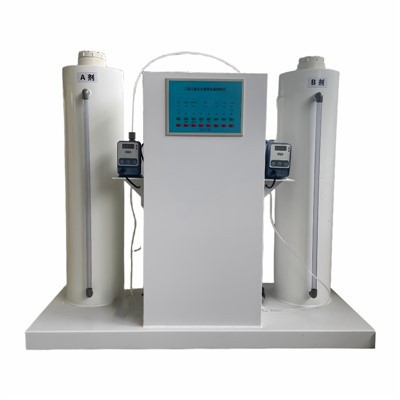
At the end of the day, odor control for packaged sewage treatment plants is about balance: balancing effectiveness with cost, ease of maintenance with reliability, and science with real-world experience. I’ve been doing this for long enough that I don’t just rely on textbooks—I rely on the clients who call me at 2 a.m. to say their plant smells bad, or the resort owners who tell me their guests didn’t notice any wastewater odors all summer, or the town officials who don’t have to field complaints from residents. If you’re in the market for a packaged sewage treatment plant, odor control shouldn’t be an add-on—it should be a core part of the system. We’ve designed systems for every scenario, from small rural plants to high-traffic commercial developments, and we’d be happy to work with you to find the right solution for your needs. If you’re ready to talk through your project, feel free to reach out to our team for a consultation. We don’t do one-size-fits-all fixes, and we don’t cut corners on something that matters—keeping your plant odor-free, and your neighbors happy.
Water Purification Equipment References
- Metcalf & Eddy, Inc. (2014). Wastewater Engineering: Treatment and Resource Recovery. McGraw-Hill Education.
- Davis, M. L., & Cornwell, D. A. (2020). Introduction to Environmental Engineering. McGraw-Hill Education.
- U.S. Environmental Protection Agency. (2019). Odor Control for Wastewater Treatment Facilities: A Guide for Small and Medium Systems. EPA 832-R-19-005.
- Weber, A. S., et al. (2018). Biofiltration for Odor Control in Distributed Wastewater Treatment Systems. Journal of Environmental Engineering, 144(10), 04018087.
Shandong Lingke Environmental Technology Co., Ltd.
We’re well-known as one of the leading packaged sewage treatment plant manufacturers and suppliers in China, featured by quality products and good price. Please rest assured to buy durable packaged sewage treatment plant for sale here from our factory. Customized orders are welcome.
Address: 100 Meters South of the Intersection of County Road 042 and National Highway 309, Changle County, Weifang City, Shandong Province
E-mail: aileenlin@sdlingkegroup.com
WebSite: https://www.lkecotech.com/
