Hey there, if you’re in the market for a corrugated pipe machine, I’m guessing you’re not just scrolling for the fanciest gear out there—you need something that actually fits your operation, doesn’t break the bank, and won’t leave you stuck troubleshooting every other week. I’ve been selling these machines for years, and let’s be real: I’ve seen way too many folks make the same messy mistake of grabbing whatever looks good online, only to realize it’s way too big for their workshop, can’t handle the pipe sizes they actually need, or eats through parts like candy. So let’s cut the corporate jargon and break this down like we would over a coffee (or a work break beer, no judgment). Corrugated Pipe Machine

First off, let’s talk about what you’re actually making. The whole point of a corrugated pipe machine is to make those flexible, ridged pipes used for drainage, cable protection, sewage, even farm irrigation, right? But not all pipes are created equal. Are you making tiny stuff—like 10mm pipes for protecting phone cables—or big 100mm pipes for construction drainage? That’s a game-changer. I had a customer last year who bought a machine that only did up to 50mm because it was cheap, then realized his main client needed 80mm pipes for a local housing development. He wasted $12k and had to buy a whole new machine before his contract even ended. Ouch. So make a list of every pipe size and type you’ll actually run—don’t just guess. Also, what material? Most machines handle PE (polyethylene) or PP (polypropylene), but if you’re messing with PVC, you need a machine built specifically for that—PVC melts at a different temp, so a PE machine will jam or warp it every time. That’s a basic one, but you’d be shocked how many people skip it.
Next up, line speed and output capacity. This is tied to your business, not just the machine. Let’s say you run a small workshop that does 100 pipes a day—you don’t need a machine cranking out 500 an hour. It’ll take up half your space, use way more electricity, and you’ll be running it at half speed, which can actually damage parts over time. On the flip side, if you’ve got a steady client that needs 1,000 pipes a day, a slow machine will hold you back, make you miss deadlines, and lose you money. I always ask customers: how much do you actually need to make in a week, not just what you hope to make? That way we don’t get something too small or too much.
Then there’s the build quality and the parts. This is where the cheap machines hide all their garbage. You’ll see some guys online selling machines for $20k less than everyone else, but when you dig into it, they use cheap steel for the corrugator plates, and those wear out in 6 months. The good machines use high-tensile steel, maybe even coated with something to resist the plastic melting sticking to it. Also, what about the control system? Old machines use clunky dials that make adjusting for a new pipe size a 2-hour job. Newer ones have touchscreen controls that let you save presets, so you switch between sizes in 2 minutes. That might sound like a small thing, but when you’re switching sizes all day, that saved time adds up to more pipes made, more money. And don’t forget about replacement parts—can you get them locally? Some no-name brands send you parts from overseas that take 4 weeks to arrive, and your machine’s just sitting there, not making money. I only sell machines where parts are easy to get, and I keep a stock of common ones on hand for my customers, so if something breaks, it’s fixed in a day, not a month.
Space and installation—people sleep on this, big time. You can have the best machine in the world, but if it won’t fit in your workshop, it’s useless. Measure twice, order once. Don’t just go by the manufacturer’s “footprint” number—leave extra space around it for loading raw material, storing finished pipes, and the operator moving around. Also, what’s required to install it? Some machines need a big power line (like 3-phase), and if your shop only has single-phase, you’ll need to spend thousands on upgrading your electrics. That’s an extra cost no one budgets for, and it can turn a “great deal” into a money pit. Last thing on space: do you need a machine that’s mobile? If you’re doing on-site jobs, some of the smaller portable corrugated pipe machines are perfect—no need to have it bolted down permanently. Just roll it to the job site and go.
Support and after-sales—this is non-negotiable, in my book. Let’s face it, even the best machines break occasionally, and when they do, you don’t want to be stuck on hold with some call center in another country, waiting for someone who doesn’t know what a corrugator is. Look for a supplier that offers on-site training, especially if you or your team are new to running these machines. I bring my techs out to walk customers through everything, from loading PE pellets to fixing a jam, so no one’s guessing. Also, what’s the warranty? A good machine should have at least a 1-year warranty on parts, and maybe even longer on the main components. I stand behind every machine I sell, so if something’s broken within that first year, I’m on it, no questions asked. And if you have a problem down the line, even after the warranty, you can call me and we’ll sort it out, not send you a 50-page manual that’s written for engineers.
Wait, also—think about future growth. If you’re just starting out, you might be making small pipes now, but what if you land a bigger contract next year? Is the machine you’re looking at upgradeable? Some machines can have an extra extruder added later to make thicker-walled pipes, or a bigger corrugator to make larger diameters. That way you don’t have to buy a whole new machine when your business takes off. I always tell new customers to “buy for where you want to be, not just where you are today.” It’s a little extra up front, but it saves you thousands in the long run.
Let’s recap the stuff you can’t skip: know your pipe size and material, match line speed to your actual output needs, check build quality and part availability, measure your space and check power requirements, ask about support and warranty, and think about future growth. If you skip any of these, you’re setting yourself up for frustration. I’ve had customers who did their homework and are still running their machines 5 years later, cranking out pipes without issues. And I’ve had the ones who grabbed the cheapest thing without checking all this—they’re calling me a year later, asking how to sell their machine for half what they paid for it.
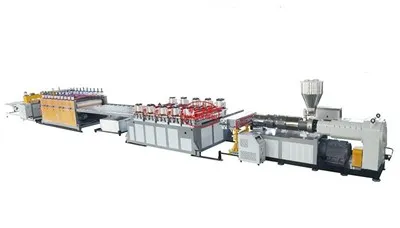
At the end of the day, this is an investment, right? You’re not buying a toaster that you’ll replace in 2 years. A good corrugated pipe machine should last you a decade or more. So don’t chase the lowest price—chase the right fit for your business. If you’re not sure, or you want to run your pipe specs by someone who actually uses these machines every day, hit me up. I’m here to help, no pressure, no sales pitch that’s full of crap. Just honest advice from someone who’s been in this game way too long.
Single Wall Corrugated Pipe Machine References:
- Corrugated Pipe Machinery Industry Association. (2022). Buyer’s Guide to Plastic Pipe Extrusion Equipment.
- Global Market Insights. (2023). Corrugated Pipe Machine Market Analysis, Growth, and Forecast.
- International Society of Plastics Engineers. (2021). Best Practices for Maintaining Extrusion Line Equipment.
- European Committee for Standardization. (2020). Safety Requirements for Plastic Processing Machinery.
Qingdao Tongsanhegu Plastic Machinery Manufacturing Co., Ltd.
With abundant experience, we are one of the most reliable corrugated pipe machine manufacturers and suppliers in China. We warmly welcome you to buy durable corrugated pipe machine for sale here from our factory. Quality products and reasonable price are available.
Address: West of Xixinzhi Village, Sanlihe District Jiaozhou, Qingdao City, Shandong Province, China
E-mail: info@tongsanhegu.com
WebSite: https://www.tongsanhegumachine.com/
