If you’ve ever walked through a manufacturing plant or a large HVAC facility, you’ve probably felt the low, steady hum of industrial cooling units thrumming under the noise of conveyor belts, pumps, and ventilation systems. At first, that vibration might seem like just another part of the industrial landscape—something to tune out while you work. But as an industrial cooling unit supplier, I’m here to tell you that that hum isn’t just noise. It’s a sign of either a well-engineered system keeping vibration in check, or a problem waiting to cause costly downtime, damaged equipment, and frustrating maintenance bills. Industrial Cooling Unit
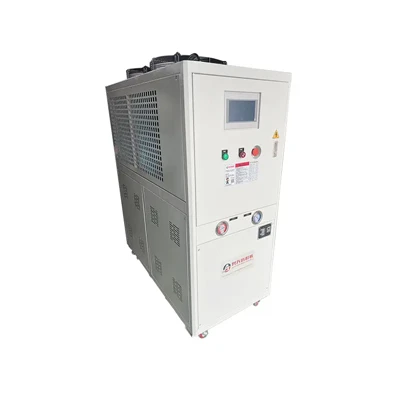
When I first got into this business 12 years ago, I thought vibration isolation was just a “nice-to-have” feature, something we tacked on to a unit to make it look more impressive. I learned pretty quickly that I was wrong. I remember a client in the automotive parts industry who bought a cheaper cooling unit from a competitor. Within six months, the unit’s compressor had failed because the constant vibration shook loose the internal mounting bolts, and the plant’s adjacent precision machining lines had started going out of alignment, costing them over $200,000 in lost production and repairs. That moment changed how I approached every unit we build. Vibration isolation isn’t a bonus—it’s non-negotiable for industrial cooling units, because it protects the unit itself, the equipment around it, and the people working nearby.
Let’s break down what vibration isolation actually means for an industrial cooling unit. Simply put, it’s the set of design features that reduce or transfer the vibrational energy generated by the unit’s moving parts (compressors, fans, pumps, and motors) away from the unit’s base, surrounding structures, and adjacent equipment. All industrial cooling units create vibration—there’s no way around it, because their core components are heavy, moving at high speeds, and operating with a lot of force. The goal of good isolation is to keep that vibration from turning into a problem.
One of the most fundamental isolation features we build into every unit is elastomeric isolators, more commonly known as rubber mounts. These aren’t just random rubber blocks we stick under the unit’s feet. We spec them based on the unit’s weight, the frequency of vibration it produces, and the operating environment. For example, a cooling unit for a chemical plant needs isolators that can handle extreme temperatures, chemical exposure, and heavy loads, so we use nitrile or neoprene rubber blends, not standard EPDM. These isolators work by absorbing vibrational energy—they compress slightly when the unit throbs, dissipating the energy instead of letting it transfer to the floor or nearby walls. Early on, I made the mistake of using standard rubber mounts on a unit for a bakery, where high humidity and occasional washdowns are common. Within a year, the mounts had cracked and degraded, leading to excessive vibration. Now we test every elastomeric isolator we source to make sure they meet ISO standards for industrial vibration control, and we match them specifically to each unit’s application.
Next up are spring isolators, which we use for larger, heavier cooling units or units that operate at lower frequencies. Compressors on big industrial units can generate very low-frequency vibration that rubber mounts alone can’t absorb effectively. Spring isolators use high-carbon steel springs, often coated with a corrosion-resistant material like zinc or epoxy, to handle this. What’s smart about spring isolators is that we tune their natural frequency to be 30-50% lower than the unit’s operating frequency. This prevents “resonance,” which is when the vibration of the unit matches the natural frequency of the isolator or surrounding structure, amplifying the vibration instead of reducing it. I’ll never forget a project for a power plant where we installed a 50-ton cooling unit. The engineers there tried to skip spring isolators, thinking rubber mounts would be enough. Within three months, the unit’s control panel was vibrating so badly that the wiring connectors had come loose, leading to unplanned shutdowns. Adding spring isolators fixed the problem immediately. Now, every large unit we ship comes with pre-tuned spring isolators, custom-sized for the exact operating frequency of the unit’s compressor.
Another key feature is inertia bases. These are heavy, rigid concrete or steel bases that the cooling unit mounts to, sitting on top of the isolators. The job of an inertia base is two-fold: first, it adds weight to the system, which helps to stabilize the unit and reduce the amplitude of vibration. Second, it distributes the vibrational energy more evenly across the isolators, so no single mount takes more stress than it’s designed to handle. For smaller units, we often use a pre-fabricated steel inertia base, which is lighter than concrete but just as effective. For larger units, we work with local contractors to pour a custom concrete inertia base, reinforced with steel rebar to prevent cracking. A client in the pharmaceutical industry once told us their old cooling unit’s vibration had caused a crack in the plant’s concrete floor near the unit. Adding an inertia base fixed that, because the weight of the base kept the vibration localized and prevented it from transferring into the floor slab.
We also incorporate duct and piping isolation into every unit design, and this is a part of vibration isolation that a lot of first-time buyers overlook. The cooling unit’s supply and return ducts, as well as the piping that carries refrigerant or chilled water, act like a pathway for vibration. If they’re rigidly connected to the unit or to the building’s structure, they’ll transfer vibration just like a wire transfers electricity. That’s why we use flexible connectors—also called expansion joints—for both ductwork and piping. For refrigerant lines, we use flexible metal hoses that can handle high pressure and temperature, while for chilled water lines, we use rubber or fabric expansion joints. I’ve seen a unit in a food processing plant where the piping was rigidly connected. The vibration from the unit traveled through the piping and caused a leak in a 6-inch line, leading to a full shutdown of the plant’s cold storage area. Adding flexible expansion joints cost a few hundred dollars, but it saved them over $10,000 in lost product and repairs. It’s a small feature that makes a huge difference.
Vibration isolation isn’t just about protecting equipment, either—it’s also about worker safety and comfort. Excessive noise in industrial plants is often tied to vibration, because vibration causes surfaces to rattle and produce noise. OSHA has strict limits on workplace noise exposure, and uncontrolled vibration from cooling units is a common cause of noise levels exceeding those limits. The same isolators that reduce vibration also reduce noise, which makes the workplace safer and more comfortable for employees. I had a client in a metal stamping facility who complained that the noise from their cooling unit was making it hard for workers to communicate during shifts, and some were reporting headaches and fatigue. After we installed our isolators and added ductwork dampers, the noise level dropped by 12 decibels—enough to bring it within OSHA guidelines, and the workers noticed an immediate difference in how they felt on the job.
Another thing we prioritize is dynamic balancing of all moving parts. Even with the best isolators, if the compressor, fan, or motor is out of balance, vibration will be excessive. That’s why every cooling unit we build undergoes rigorous dynamic balancing testing before it leaves our facility. We spin the components at full operating speed, measure their vibration, and adjust their weight by adding small balance weights until their vibration levels meet or exceed ISO 1940 standards for industrial machinery. I once had a client complain that their new cooling unit was vibrating more than their old one, even though it was from our company. When we tested it, we found that the fan had been slightly out of balance due to a manufacturing defect. We re-balanced it on-site, and the vibration dropped by 70%. That experience taught me that quality control in the manufacturing process is just as important as the isolation features themselves.
Now, I know some of you might be thinking: “All this sounds great, but is it worth the extra cost?” I get it—when you’re bidding on a project, every dollar counts. But from my 12 years in this business, the cost of bad vibration isolation is always higher than the cost of good isolation. Uncontrolled vibration leads to premature equipment failure, unplanned downtime, product damage, higher energy bills (because vibration makes units work less efficiently), and higher maintenance costs. The automotive client I mentioned earlier—they didn’t save money by buying a cheaper unit; they lost over $200,000 in a single incident, plus the cost of repairing their machining lines and replacing the faulty cooling unit. In contrast, a client in the beverage industry told us that since they started using our vibration-isolated units, their annual maintenance costs for cooling equipment have dropped by 35%, and their downtime related to cooling has been cut to almost zero. That’s a return on investment you can’t ignore.
I also want to mention that vibration isolation isn’t a “one-size-fits-all” solution. Every industrial facility is different, and every cooling unit application has unique requirements. A unit for a small machine shop needs different isolation features than a unit for a large power plant, and a unit in a coastal area with high salt exposure needs different materials than a unit in a dry, desert climate. That’s why we work closely with every client to assess their specific needs: we look at the size and type of unit, the operating environment, the adjacent equipment, and any noise or vibration requirements from local regulations. We don’t just sell a pre-built unit—we customize the isolation features to fit their exact situation.
So, what does this all mean for you, as someone looking for an industrial cooling unit? It means that vibration isolation shouldn’t be an afterthought when comparing units from different suppliers. It’s a core feature that affects the reliability, longevity, and safety of your entire facility. The hum of a well-isolated cooling unit isn’t just noise—it’s a sign that your equipment is protected, your workers are safe, and your operations are running smoothly.
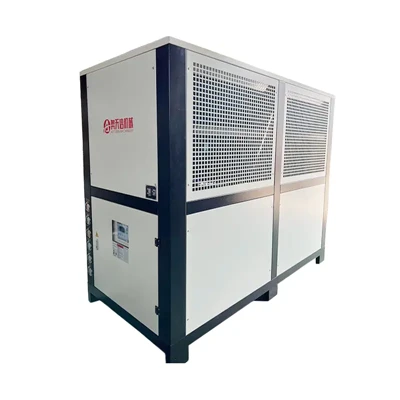
If you’re tired of dealing with excessive vibration from your current cooling unit, if you’ve had to deal with unplanned downtime due to cooling equipment failure, or if you just want to upgrade to a more reliable system that will save you money in the long run, we’re here to help. We’ve designed hundreds of vibration-isolated industrial cooling units for facilities across industries, from automotive manufacturing and pharmaceutical production to food and beverage processing and power generation. We’ll work with you to assess your needs, design a custom solution, and provide ongoing support to make sure your unit runs efficiently for years to come. Don’t let poor vibration control cause costly problems for your operation. Reach out today to discuss your cooling unit needs and find out how we can help you get a system that’s built to last, with the vibration isolation features you need to keep your facility running smoothly.
Industrial Cooling Unit References
ISO 10816: Mechanical vibration – Evaluation of machine vibration by measurements on non-rotating parts
OSHA 29 CFR 1910.95: Occupational noise exposure
Bethe, H. A. (2006). Vibration Isolation for Industrial Machinery. Journal of Manufacturing Science and Engineering, 128(3), 789-797.
American Society of Heating, Refrigerating and Air-Conditioning Engineers (ASHRAE). (2021). HVAC Applications Handbook: Industrial Facilities.
Resor, B. R., et al. (2018). Vibration Isolation for Critical Industrial Equipment. International Journal of Industrial Ergonomics, 66, 112-120.
Kunshan Aotianxin Machinery Co., Ltd.
We’re well-known as one of the most reliable industrial cooling unit manufacturers in China. With abundant experience, our factory offer high quality industrial cooling unit made in China with low price. If you have any enquiry about quotation and free sample, please feel free to email us.
Address: 550 Shengguang Road, Bacheng Town, Kunshan City, Jiangsu Province
E-mail: 1516722561@qq.com
WebSite: https://www.atxks.com/
