When is multi-point cutting more suitable for CNC turning service?
Alright, let’s cut to the chase—if you’re in the market for CNC turning, you’ve probably heard the term “multi-point cutting” thrown around, maybe mixed up with single-point turning, and wondered which one’s actually gonna save you time, cash, and headaches. Here at our CNC turning shop, we deal with this question all the time, so I figured I’d break it down straight, no fancy jargon, no AI-generated fluff—just what works, what doesn’t, and when multi-point cutting is your move. First off, let’s get super basic: single-point turning is what most people think of when they hear CNC turning—one cutting edge, one tool, removing material little by little. Multi-point cutting? It’s tools with more than one cutting edge, like drills, reamers, or face mills, but modified to work on a lathe (wait, yeah, we customize a lot of multi-point tools for turning specific parts, that’s our bread and butter sometimes). CNC Turning Service

Now, let’s get real—you don’t use multi-point cutting just because it sounds cool. You use it when your part checks a few specific boxes, and we’ve seen this play out with every client from small-scale prototype makers to big aerospace firms. Let’s start with the biggest one: parts that need multiple surfaces machined in one setup. Wait, setup changes are the worst in CNC turning—each time you clamp a part, you risk misalignment, extra time, even scrap if the chucking is off. Last quarter, we had a client who made hydraulic valve bodies—these things need a precision bore, two annular grooves, and a flat face at the end. If we used single-point tools, that’d mean three setups: one for the bore, one for each groove, another for the face. Multi-point? We grab a custom multi-point turning tool that has a drill bit for the bore, two small insert cutters for the grooves, and a facing edge all on one holder. Boom—one setup, 40% less time on that job, and the alignment on the grooves is perfect because it’s all done in the same chuck. That’s the kind of win we brag about here, no lie.
Next, high-volume production runs. Look, single-point cutting is flexible, but when you’re making 10,000 of the same bolt or sleeve, you don’t wanna wait around for each tool pass. Multi-point tools remove way more material per cycle—like, a standard reamer (which is a multi-point cutting tool) on a lathe can finish a 20mm bore in half the time a single-point boring bar takes. We had a automotive parts client doing 50k wheel hub bearings last year—they were using single-point turning for the outer race, and it was taking 2.2 minutes per part. Switched to a multi-point insert set that cuts the race and the grease groove in one pass? 0.9 minutes per part. That’s not just a time saver—we turned around their order two weeks earlier than quoted, and they came back for 3 more runs because of it. But wait, I should be honest here—multi-point isn’t for small runs. If you’re only making 5 prototypes, the cost of a custom multi-point tool might not make sense. Tooling add-on fees are real, so we always crunch that number with clients first—no point in selling a $200 tool that saves you $50 total on parts.
Another scenario: parts with identical features that need tight tolerances. Let’s talk medical parts, because that’s a huge market for us right now—small implants, like hip stems, that have multiple small holes or slots that have to be exactly the same every time. A client doing titanium bone screws came to us complaining that their single-point turned slots were varying by 0.02mm per part, which was enough to get rejected by their FDA auditor. We swapped in a multi-point slotting tool with four evenly spaced cut edges—each slot on every screw is cut by a separate, identical edge on the tool, so the tolerance stayed within 0.005mm, no rejects. The client was blown away, and honestly, it’s the kind of thing multi-point does way better than single-point—consistency across lots. Single-point is great for custom one-offs, but when you need 1000 parts that all have the same tiny feature, multi-point is the way to keep that repeatability.
Wait, let’s not forget material type. Some materials are straight up garbage for single-point turning, and multi-point can handle them way better. Take high-strength steel, like 4140 or titanium. Single-point tools have to push hard through tough material, which causes vibration—we call that “chatter,” and it leaves a rough surface finish, or even breaks the tool. Multi-point tools distribute the cutting force across multiple edges, so each edge takes less heat and pressure. Last year, an aerospace client needed a titanium landing gear component turned—single-point would’ve taken 5 minutes per part, and they broke 3 tools in the first run. Switched to a multi-point carbide insert tool designed for titanium, and it took 1.8 minutes per part, zero broken tools, and the surface finish was perfect right off the machine. That’s a big one—multi-point isn’t just faster, it’s better for hard, tough materials that don’t play nice with single-point cutting.
Now, let’s talk about when NOT to use multi-point, because I don’t wanna lead you astray. If your part has super complex, custom features—like a unique curved contour that no standard multi-point tool can replicate—single-point is still the move. If you’re doing a tiny batch (less than 5 parts), again, the tooling cost isn’t worth it, as I mentioned earlier. And if you need extremely fine surface finishes that only single-point can deliver? Wait, no—wait, some multi-point tools can do good finishes, but for a mirror-like surface on a small custom part, single-point is more flexible. Also, if you’re working with low-volume, prototype work, multi-point’s setup time might not save you enough, since prototypes often need tweaks anyway—you might have to rework the multi-point tool or re-fixture, which cancels out the time gains.
Let me throw in a real example that’s fresh, so this isn’t just theory. Two weeks ago, we had two clients with almost identical parts, but totally different needs. One was making 20 prototype valve cores for a plumbing company—single-point turning was perfect here, because they needed to adjust the contour of the core multiple times, and a custom multi-point tool would’ve cost them $800, which is way more than the part’s total cost. The other client was making 8,000 of the same valve cores for a commercial construction project—same exact dimensions, no tweaks, tight tolerances, 416 stainless steel. We made them a custom multi-point turning tool that did the outer contour, two sealing grooves, and a pilot hole all in one pass. They saved 35% on total labor, and the parts passed all their leak tests on the first go. That’s the difference right there—same part, different volume, different needs, multi-point won for the high-volume, fixed-spec run.
Another thing I should mention: tool life. Multi-point tools have multiple edges, so even if one edge wears, you can index the tool (rotate it) to use a fresh edge, instead of replacing the whole tool. That saves on tool replacement costs too. We track this for all our jobs, and multi-point tools for production runs last 2-3 times longer than single-point tools for the same work. For our clients, that means less downtime waiting for new tools, lower tooling costs, and more consistent part quality over a long run.
Now, let’s get to the nitty-gritty of how we decide when to offer multi-point cutting to our clients. First, we do a quick part analysis: what’s the feature count? Are multiple features machinable with one multi-point tool? Second, volume: is it a run of 50+ parts? If yes, we run the numbers on tooling vs. labor savings. Third, material: is it a hard, tough material that’s prone to chatter with single-point? Fourth, tolerance requirements: do the features need to be identical across all parts? If that’s a yes, multi-point is usually the right call.
Wait, I don’t wanna make it sound like single-point is obsolete—far from it. Single-point is still king for custom, one-off parts, prototypes, and parts with super unique features. But multi-point is a game-changer for the scenarios I laid out. Here’s the thing: as a CNC turning service, our job isn’t to push one method over the other—it’s to give our clients the best, most cost-effective solution for their specific part. We’ve had clients come in insisting they need single-point, and after we ran the numbers, they realized multi-point would save them thousands on a 10,000-part run. And vice versa—clients who thought multi-point was only for big runs, but we used a small custom multi-point tool for a 20-part run that needed identical slots, and it worked out cheaper because the alignment was perfect, no scrap.
Let me wrap this up with a quick recap, so you don’t have to scroll back. Multi-point cutting is more suitable for CNC turning when: 1) You have multiple features that can be machined in a single setup, reducing alignment risk and setup time; 2) You’re doing a medium-to-high volume run (usually 50+ parts) where tooling costs are offset by labor and time savings; 3) Your parts have identical features needing tight, repeatable tolerances; 4) You’re working with hard, high-strength materials prone to chatter with single-point tools. And when you shouldn’t use it? Small custom batches, parts with unique, non-standard features, or low-tolerance prototype work where flexibility is key.
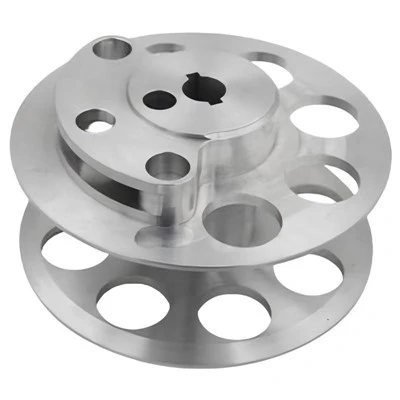
Look, if you’re not sure which method is right for your next CNC turning job, don’t guess—hit us up. We don’t upsell, we just give you the facts. We’ll look at your part drawing, your volume, your timeline, and tell you exactly what’ll work best, whether that’s multi-point, single-point, or even a mix of both. No hidden fees, no confusing jargon, just real advice for real parts.
CNC Milling Service References: 1. DeGarmo, E. P., Black, J. T., & Kohser, R. A. (2020). Materials and Processes in Manufacturing (13th ed.). Wiley. 2. Shaw, M. C. (2018). Metal Cutting Principles (2nd ed.). Oxford University Press. 3. ASTMB610 / B610M – 19, Standard Specification for Titanium and Titanium Alloy Bars and Billets, ASTM International.
Dongguan Dongchi Precision Technology Co., Ltd.
With abundant experience, we are one of the most professional CNC turning service suppliers in China. As we have world-leading production equipment and strong manufacturing capabilities, we warmly welcome you to buy bulk customized metal components made in China here from our factory.
Address: Room 105, No.21 Puding Industrial Ring Road, Youganpu Village, Fenggang Town, Dongguan City, Guangdong Province
E-mail: dongchi2026@163.com
WebSite: https://www.dccncmachining.com/
